Intersections of Health Care Promotions and Erotic Advertising in Online Marketplaces
Written by Olivia Powell · Jun 13, 2026
Intersections of Health Care Promotions and Erotic Advertising in Online Marketplaces
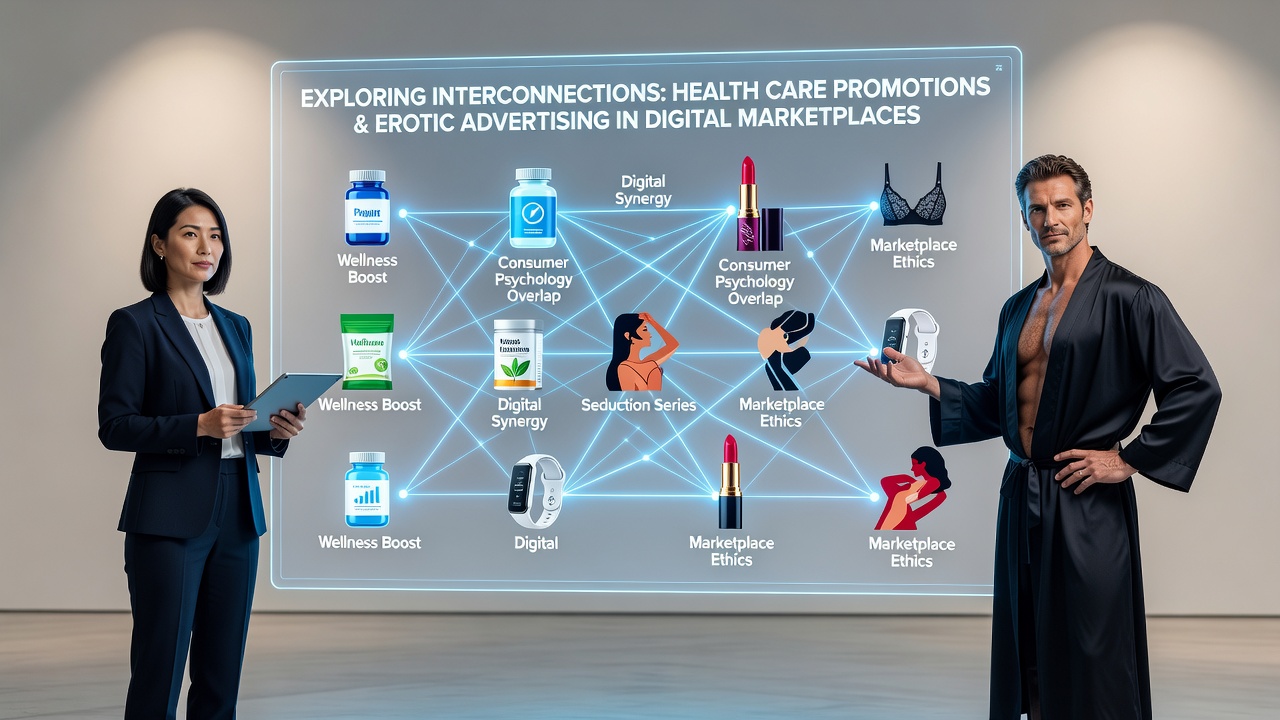
Digital marketplaces have become central hubs where health care product promotions and erotic advertising often share similar platforms, targeting methods, and algorithmic strategies, according to industry reports from regulatory bodies across multiple regions. Data from the U.S. Food and Drug Administration shows that health care items such as supplements and wellness devices frequently appear in sponsored sections that overlap with adult-oriented categories, while figures from Health Canada indicate parallel patterns in North American e-commerce ecosystems. These overlaps occur because both sectors rely on personalized ads driven by user behavior data, search histories, and demographic profiles.
Shared Digital Strategies in Product Promotion
Marketing teams for health care products and erotic goods deploy comparable techniques including influencer partnerships, retargeting pixels, and search engine optimization that capitalizes on long-tail keywords. Observers note that platforms like major online retailers and social networks use the same recommendation engines for both categories, which leads to co-location in user feeds and sidebar placements. Research from the European Commission on digital services reveals that algorithmic amplification affects visibility for wellness aids and intimate products in similar ways, with engagement metrics guiding placement decisions across regions including the EU and Australia.
Case studies demonstrate how one campaign for erectile dysfunction treatments might utilize the same ad networks as promotions for adult toys, creating indirect exposure pathways. Those who analyze ad auctions find that bidding systems treat both verticals with comparable pricing structures based on conversion rates rather than product type alone. This convergence stems from shared reliance on data brokers that aggregate information from fitness apps, dating sites, and health trackers.
Regulatory Frameworks and Compliance Patterns
Government agencies enforce distinct rules yet encounter parallel enforcement challenges in both sectors. The Therapeutic Goods Administration in Australia monitors health claims in advertisements while separate guidelines address explicit content, yet digital platforms sometimes blur these lines through user-generated promotions. In the UK the Medicines and Healthcare products Regulatory Agency tracks similar issues with over-the-counter health items that appear near restricted adult material. Data indicates that violations often involve unsubstantiated efficacy statements in health ads that mirror exaggerated performance claims in erotic marketing.

Compliance teams at large marketplaces implement automated filters that flag certain terms across both categories, though loopholes persist through euphemistic language and image-based promotions. Studies compiled by academic institutions highlight that enforcement actions in June 2026 focused on cross-border digital sales where jurisdictional differences complicate oversight for products shipped internationally. Those monitoring these trends observe that self-regulatory bodies within the advertising industry have issued joint guidance documents addressing overlapping concerns without merging the two fields outright.
Market Data and Audience Overlaps
Analytics firms report that user segments interested in preventive health supplements frequently intersect with audiences for personal wellness products that include erotic elements. Figures reveal higher click-through rates when ads from both categories appear in sequence on the same pages, suggesting behavioral correlations rather than direct causation. Platforms collect metrics showing that evening browsing patterns boost visibility for both health recovery items and intimate lifestyle goods.
Trade associations in the digital advertising space have documented how budget allocations for health care campaigns sometimes spill into broader lifestyle networks that also host erotic content. One analysis from a Canadian research institute found that keyword clusters around stress relief and vitality lead to mixed result pages containing items from each sector. These patterns emerge consistently across desktop and mobile interfaces where responsive design places multiple ad formats in proximity.
Conclusion
Digital marketplaces continue to evolve with interconnected promotional tactics that link health care products and erotic advertising through shared technologies and audience behaviors. Regulatory developments across the US, EU, Canada, and Australia shape how these intersections are managed while market data underscores ongoing overlaps in visibility and engagement. Observers tracking these dynamics point to algorithmic and data-driven foundations as primary drivers behind the observed connections in online environments.