Observed Patterns in Banner Advertisement Effectiveness for Footwear and Computing Accessories Retail
Written by Theo Hoffmann · Jun 23, 2026
Observed Patterns in Banner Advertisement Effectiveness for Footwear and Computing Accessories Retail
Examining Core Metrics Across Retail Niches
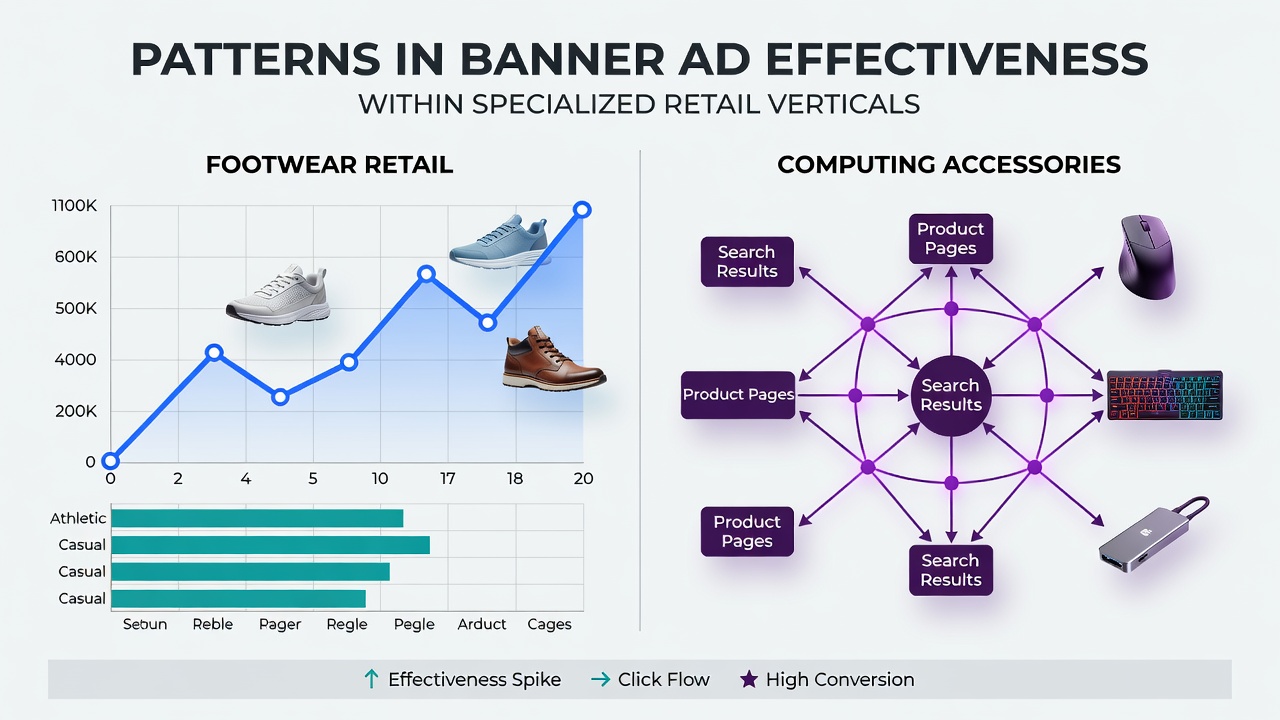
Analysts track click-through rates, conversion percentages, and view-through metrics when evaluating banner performance in specialized retail sectors, and data from multiple campaigns reveal distinct response curves depending on product category. Footwear retailers often see elevated engagement with lifestyle-oriented imagery that highlights fit and style while computing accessory sellers record stronger results from technical specification callouts and compatibility indicators. These differences emerge consistently in aggregated platform reports compiled throughout 2025 and into early 2026.
Footwear Sector Trends and Placement Variables
Studies conducted by trade groups indicate that footwear banners achieve higher interaction when positioned on fashion discovery pages rather than direct checkout flows, and seasonal color palettes paired with lifestyle photography drive measurable lifts in session duration. Observers note that mobile placements outperform desktop versions by noticeable margins in this vertical because shoppers frequently browse on phones during commute hours or evening downtime. One analysis covering European markets showed that banners featuring dynamic product carousels maintained attention longer than static images, particularly when paired with limited-time discount messaging.
Geographic variations appear as well, with North American campaigns recording stronger performance on social commerce integrations compared to standalone retail sites, whereas Asia-Pacific data points to influencer co-branded units generating sustained traffic. Researchers tracking these patterns emphasize that audience overlap between athletic footwear and outdoor apparel categories creates cross-promotional opportunities that increase overall banner recall.
Computing Accessories Response Patterns
Computing accessory campaigns display different dynamics, with banner effectiveness rising when creative elements emphasize performance benchmarks and compatibility logos rather than purely aesthetic appeal. Data compiled by industry monitoring services shows that technical accessory banners placed near review comparison tools convert at elevated rates because users actively seek specification validation during that browsing stage. Placement near bundle offers also produces consistent results across multiple quarters, suggesting that perceived value messaging resonates strongly within this audience segment.
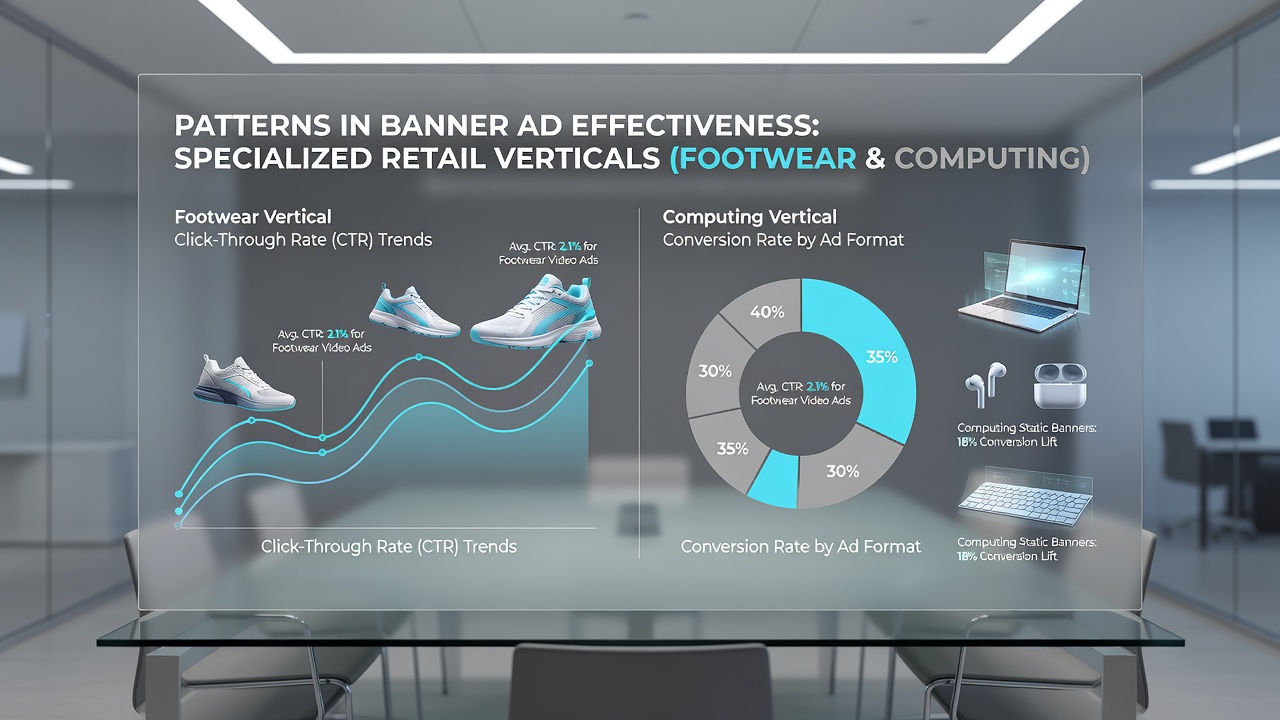
Canadian retail data further highlights that banners promoting wireless peripherals achieve peak performance during back-to-school periods, while European figures point to stronger engagement around new operating system release windows. Those monitoring these verticals observe that retargeting sequences combining initial awareness banners with later specification-focused units improve progression through the purchase funnel more reliably than single-message approaches.
Comparative Factors Influencing Outcomes
Cross-category comparisons reveal that footwear banners benefit more from emotional and aspirational framing whereas computing accessory units respond better to informational density and trust signals such as certification badges. Audience demographics play a documented role, with younger cohorts engaging footwear creative at higher volumes and professional segments interacting more readily with accessory specification highlights. Platform algorithms also shape results because recommendation engines surface footwear banners within style discovery feeds more aggressively than within technical accessory ecosystems.
Researchers from various institutions have documented that testing frequency, creative refresh cycles, and audience segmentation precision correlate with sustained performance improvements across both verticals. Campaigns that incorporate A/B iterations based on real-time metric feedback maintain steadier returns compared to those relying on fixed creative sets. eMarketer analyses covering multiple regions confirm these directional patterns hold across diverse market conditions.
Measurement Approaches and Data Sources
Attribution modeling continues to evolve, and multi-touch frameworks now capture banner influence even when direct clicks do not immediately precede purchases. Retailers applying these models report clearer visibility into how initial banner exposure contributes to later consideration stages, particularly within longer purchase cycles typical of computing accessories. Footwear purchases, by contrast, often compress into shorter decision windows that favor immediate response tracking.
Additional insights appear in reports issued by the Australian Competition and Consumer Commission digital advertising reviews, which examine transparency requirements and their effect on creative testing practices. Observers note that standardized measurement protocols help isolate vertical-specific variables from broader platform changes.
Conclusion
Patterns in banner advertisement effectiveness within footwear and computing accessory verticals reflect measurable differences in creative approach, placement strategy, and audience alignment. Continued monitoring of these variables enables retailers to refine campaigns based on category-specific response data rather than generalized assumptions. Ongoing platform developments and shifting consumer browsing habits will likely sustain the need for granular analysis across these specialized retail segments.