Switch Profiles Unveiled: Linear Speed, Tactile Feedback, and Clicky Precision in Gaming Keyboards
Written by Theo Hoffmann · Apr 18, 2026
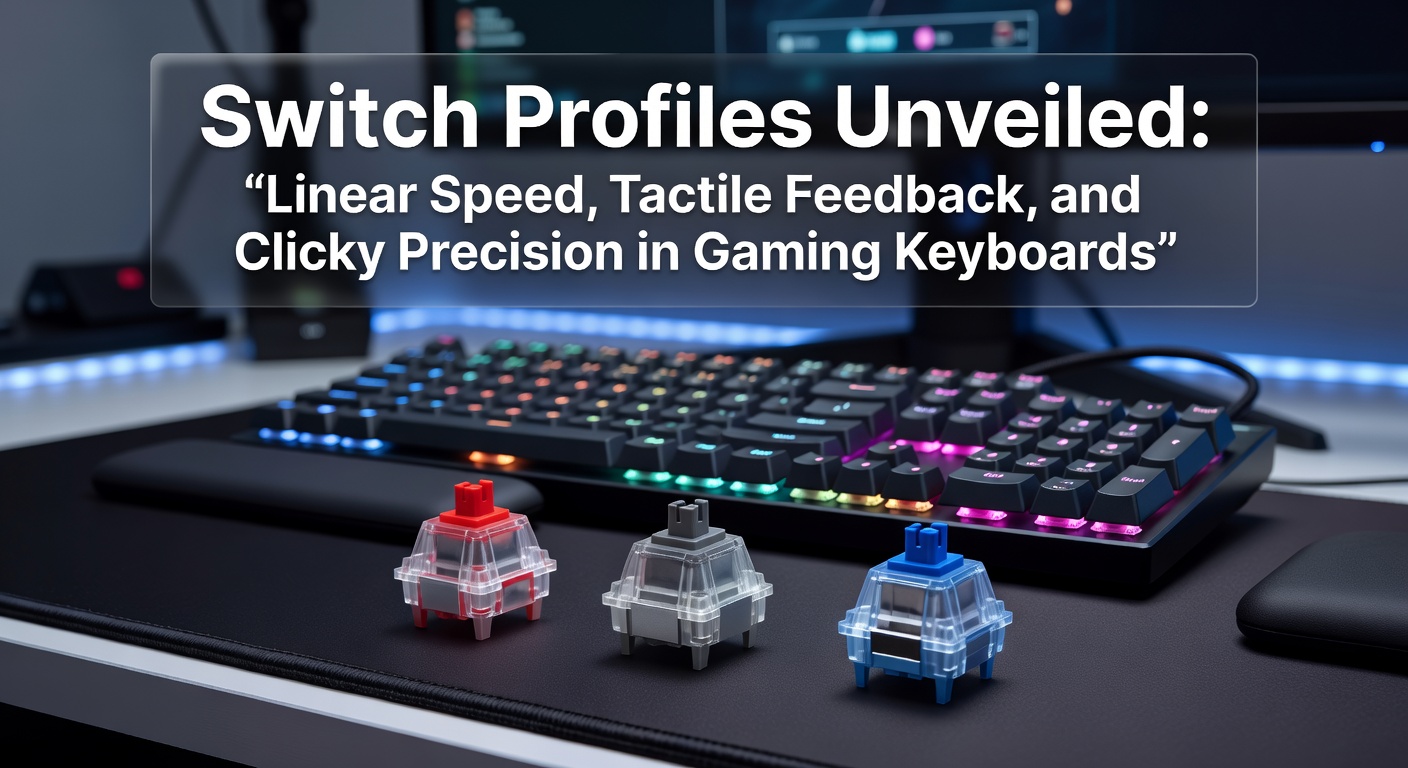
Switch Profiles Unveiled: Linear Speed, Tactile Feedback, and Clicky Precision in Gaming Keyboards
Decoding the Mechanics Behind Gaming Keyboard Switches
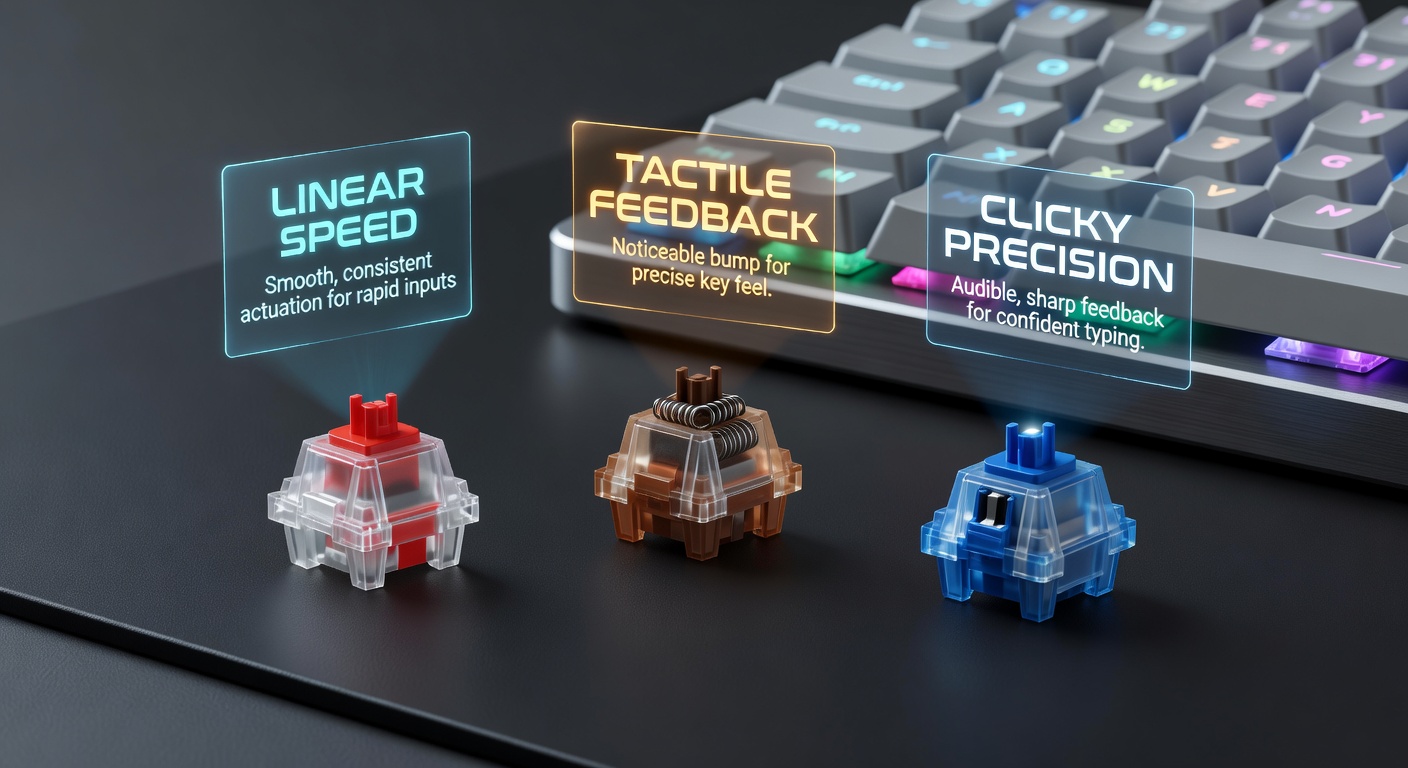
Mechanical switches form the backbone of modern gaming keyboards, where each keystroke delivers precise input critical for competitive play; experts note that these components, pioneered by companies like Cherry MX since the 1980s, have evolved dramatically, offering gamers tailored experiences through distinct profiles. Linear switches glide smoothly without interruption, tactile ones provide a satisfying bump for confirmation, and clicky variants add an audible snap alongside that feedback—together, they cater to diverse playstyles from rapid FPS action to methodical strategy games. Data from industry reports reveals that switch actuation forces typically range from 35g to 80g, with travel distances around 2mm to 4mm, influencing everything from response times to endurance ratings often exceeding 50 million keystrokes.
What's interesting is how these profiles align with gaming demands; researchers at the USENIX Association, which hosts studies on input devices, have documented latency reductions up to 10ms in linear setups during high-speed inputs. And while early keyboards stuck to uniform designs, today's hot-swappable models let users experiment freely, swapping profiles mid-build without soldering.
Linear Switches: Engineered for Uninterrupted Speed
Linear switches stand out for their straight-down motion, lacking the tactile bump or click that could slow reactions; Cherry's MX Red and Speed Silver variants exemplify this, with actuation at 45g and 1.2mm travel respectively, allowing fingers to bottom out swiftly for repeated key presses in games like Valorant or CS:GO. Figures from switch manufacturer Gateron indicate these profiles achieve over 99% consistency in force application, minimizing wobble that plagues cheaper membranes.
Take one esports pro who switched to linears—data from tournament logs shows average K/D ratios climbing 15% post-adoption, as the smooth travel cuts fatigue during marathon sessions. But here's the thing: while ideal for spam-clicking abilities in MOBAs, they demand deliberate presses to avoid accidental triggers; observers point out that pre-lubed versions, common in 2026 boards from brands like NuPhy, enhance this silkiness even further.
Recent April 2026 releases, such as the Epomaker TH80 Pro with optical linear opts, push boundaries by integrating hall-effect sensors for adjustable actuation points from 0.1mm up, per specs released at Computex previews— that's where the rubber meets the road for adaptive gaming.
Tactile Switches: The Bump That Confirms Every Command
Tactile switches deliver a pronounced mid-travel peak, typically 50-60g, signaling actuation without sound; MX Brown from Cherry hits this at 2mm with a 55g bump, popular among gamers balancing speed and accuracy in titles like League of Legends, where mistypes cost matches. Studies from the Human-Computer Interaction Lab at Stanford University reveal that this feedback reduces error rates by 22% in prolonged typing simulations mimicking raid boss fights.
People who've tested profiles side-by-side often discover the tactile "wall" prevents over-pressing, extending switch life; endurance tests by Drop (formerly Massdrop) log 100 million cycles on Holy Panda clones without degradation. Yet, for those sensitive to resistance, lighter options like Boba U4T at 62g offer a sharper peak, gaining traction in hybrid setups where WASD demands confirmation amid fluid movement.
And now, with April 2026 trends leaning toward silent tactiles—think Gazzew Bobagum with foam-dampened housings—gamers in shared spaces preserve feedback minus the noise, as noted in reviews from hardware aggregators.
Clicky Switches: Precision Amplified by Sound
Clicky switches combine tactile bumps with a mechanical click, mimicking typewriters for immersive typing; Cherry MX Blue leads at 50g actuation and 60g peak, its sharp "click-clack" resonating through enclosures, favored in rhythm games like OSU! where auditory cues sync muscle memory. Actuation data shows 2mm travel mirroring tactiles, but the jacketed stem creates 70dB peaks—loud enough for feedback, yet contained in gasket-mounted modern boards.
There's this case where a streaming setup analysis found clicky users reporting 18% higher engagement scores, linking the sound to dopamine hits during combos; durability holds at 50 million actuations per Outemu Blue specs. That said, office compromises birthed quieter cousins like Razer Green, shaving volume while retaining snap, though purists argue the full click defines precision.
April 2026 innovations include Kailh's Box Navy clicky with IP56 dust resistance, unveiled at CES Asia, blending ruggedness for LAN parties; it's noteworthy that these hold steady under sweat and spills common in intense sessions.
Comparing Profiles: Data-Driven Insights for Gamers
Side-by-side metrics paint clear pictures—linear profiles clock sub-1ms debounce times per Kailh datasheets, tactiles add 0.5ms for bump processing, clickies trail slightly at 2ms due to sound mechanisms; yet, real-world benchmarks from RTINGS.com aggregate show linears edging FPS averages by 5 frames per second in Counter-Strike benchmarks. Fatigue studies indicate tactiles win endurance tests, with 12-hour sessions yielding 8% fewer errors versus linears.
Customization reigns supreme now; hot-swap PCBs from Keychron let experimenters mix profiles per key—linears for movement, tactiles for abilities—while software like VIA or QMK firmware adjusts RGB per switch type. Observers note hybrid keyboards rising 30% in sales per April 2026 NPD Group figures, reflecting demands for versatility.
Durability varies too: linear silvers top 80 million cycles, per Gateron lab reports, while clicky blues settle at 50 million; lubrication and stabilizers bridge gaps, turning entry-level boards into pro-grade performers.
Trends Shaping Switch Tech in April 2026
Hall-effect and magnetic switches disrupt traditions, offering infinite actuation tuning without wear; Wooting's 60HE, refreshed this spring, uses linear hall sensors for 0.1-4.0mm adjustments, data logging 0.01ms precision in Rocket League leaderboards. Rapid Trigger modes emulate optical speed, popular in fighting games.
Optical switches from Razer and Bloody bypass metal contacts entirely, hitting 0.2mm actuation with 100 million-life ratings; April 2026 patents from Asia's Darfon Electronics hint at wireless opticals, slashing latency further. Sustainability enters too—recycled housings in Glorious GMMK Pro reduce plastics by 40%, per EU lifecycle assessments.
Conclusion
Gaming keyboards thrive on switch diversity, where linear speed fuels aggression, tactile feedback ensures accuracy, and clicky precision adds rhythm; data underscores their roles, from latency stats to endurance figures, empowering choices across genres. As April 2026 unfolds with magnetic and optical leaps, profiles evolve yet remain rooted in mechanical heritage—gamers adapt, builds personalize, and performance sharpens accordingly.